I was on Fetlife recently and someone posted about how she was going to set unattainably-high goals for herself at work so she would be motivated to find a new job and not have to fulfill them. That’s a great plan, but it doesn’t take into account how difficult the job market is right now. I spent literally four full years looking for a job — I got about ten interviews, one offer (which I had to take because I was laid off in March of 2024), and more than a thousand rejections.
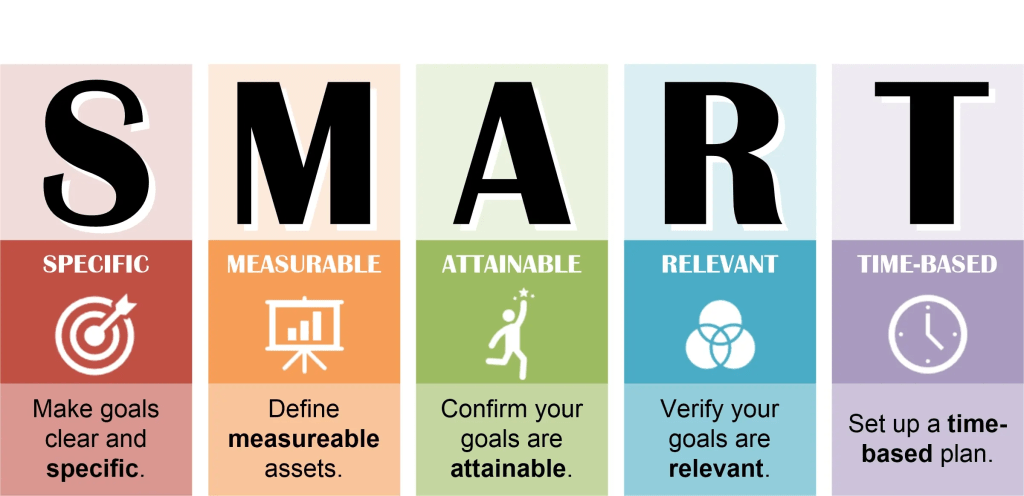
This past week, in my bi-weekly one-on-ones with my team, I talked to them about goals for next year. I started by explaining what a SMART goal is (somehow not a single one of them had ever heard of these before) and asking them to take some time to write one as practice. Of course my boss, when he sets goals for the team, doesn’t really do SMART goals, but this year we (me and my peers) are going to push him hard to make all the goals SMART in some way.
The thing about a SMART goal is that it has to be attainable; it has to be something you can affect the completion of, that someone else can’t keep you from making happen. For example, if I said I wanted to expand my team by five people in 2026, but the budget is only for two people, then the goal by definition is not attainable. A similar situation occurred with the example in the first paragraph: the person on Fetlife can set her goal, but it’s not attainable without someone else making something happen that she doesn’t control. An attainable SMART goal might be to apply for ten jobs a week every week in 2026, because she controls that goal.
Setting goals is an admirable… well… goal… but if you don’t set your goals in a SMART fashion, you probably won’t attain them. So make them specific, measurable, attainable, relevant, and time-bound, and you’ll have more success in the long run.
 JJ Rose, Author