I think it’s universally accepted by this point that LinkedIn is an echo chamber where people turn their successes and failures into so-called relevant lessons that they can share to boost engagement. How do I know? Well, when I was unemployed I used to write LinkedIn posts trying to tie my knowledge of gaming to the job market or project management.
But sometimes you hear something that pisses you off. Like a LinkedIn marketing course that recommends using the custom pronouns field on the site to put in something related to what you do. For example: executive/chef, gaming/journalist, project/manager. The course said this could help drive interest and engagement.
That’s not what the custom pronouns field is for.
I don’t use custom pronouns. I use he/him. But that doesn’t mean I can’t be angry on behalf of my friends in the queer community. Just getting the displaying of pronouns to be semi-normal in the business world was a huge fight for the queer community. At my current job, very few people put their pronouns in their email signatures — I am one of them — but no one has said anything one way or the other about it.
Neopronouns are basically anything that’s not he/him, she/her, or they/them. If someone decides to use xe/xir, for example, then xe should be guaranteed the right to let other people know how to refer to xir. The fact that LinkedIn makes this possible is great on their part. Cisgendered people misappropriating this field for their own personal marketing use is not cool.
Keep in mind the fight that neopronoun users are still going through for their (for lack of a better term) visibility and acceptance. It’s gotten worse for them, not better. So don’t take something they fought so hard for and intentionally misuse it to increase your potential engagement.
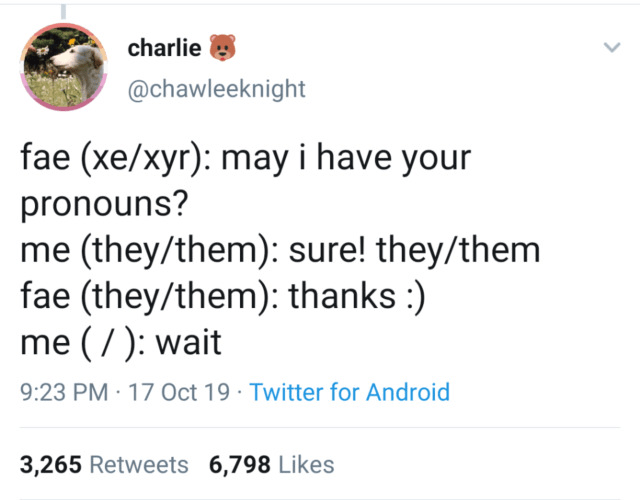
Something else I wanted to add that I couldn’t find a place for before: the spanking party community has come a long way in the past three years as it relates to pronoun usage and visibility. Most of the parties I attend allow you the option to display your pronouns on your badge. They also allow you to not do this, which I think sends a specific type of message. There are a few folks I know who are particularly against displaying their pronouns — not because they want to keep them private, but because of their political and social leanings. If you’re someone to whom pronouns are important, when the opportunity to display them is provided and someone blatantly declines that opportunity (especially cishet white men) you get a pretty good idea of where that person stands on other things relating to your rights, especially if you’re a queer person or a user of nontraditional pronouns (be it as simple as they/them or something more esoteric). And sure, some people want to keep their pronouns private, but if you’re a cishet white man you most likely do not fall into that group; you fall into the group of people who probably aren’t going to be as tolerant of queer folks. At least it’s relatively easy to tell.
 JJ Rose, Author
2 thoughts on “Pronoun Engagement”